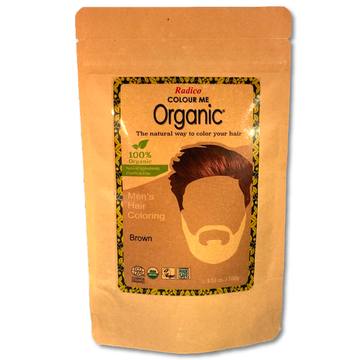
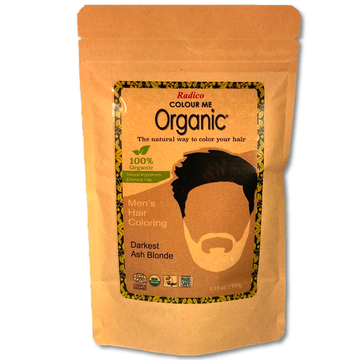
Men's Radico
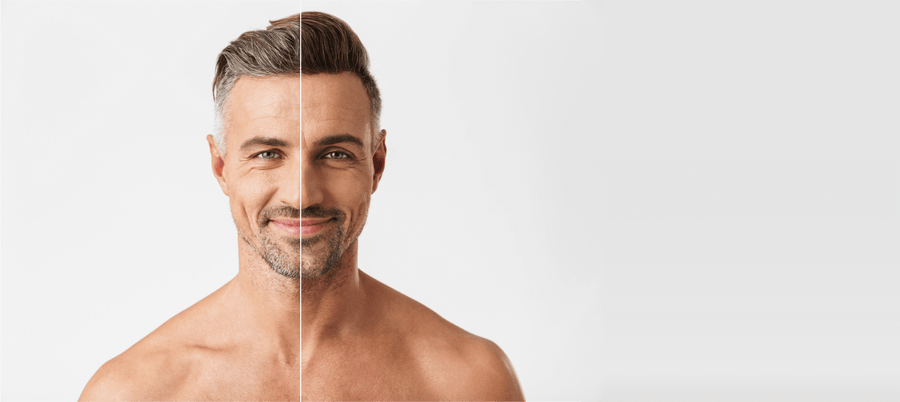
Colour Me Organic for Men
Men Asked Us for Colour
They Could Actually Use
Two requests, over and over. Men with sensitive skin wanted a beard colour that wasn't built on PPD. Men with sensitive scalps wanted a hair colour that was genuinely all plants — not "natural" with synthetic dye doing the work.
So we made both. Six plants in the beard kit, and five shades for hair from the same herbs, in proportions we adjusted after testing on men's hair.
No PPD · No PTD · No ammonia · No peroxide · No synthetic dyes

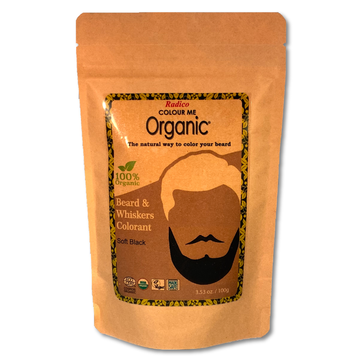
Soft Black Beard & Whiskers
Two packs, one hour each: henna first, then indigo. It takes longer than a one-step dye — that is the trade for having nothing synthetic in it. Our best-selling men's product.
See the beard kit →
Five Shades for Hair
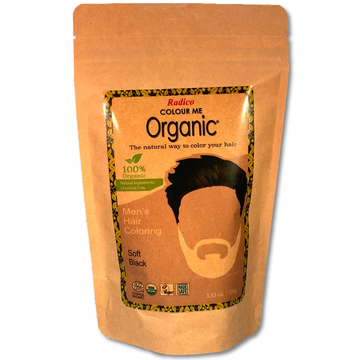
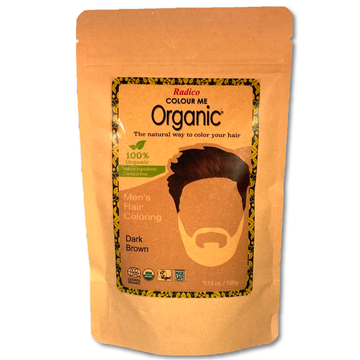
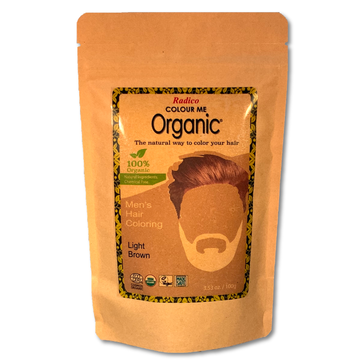
Soft Black to Light Brown, plus Darkest Ash Blonde — the one shade with no henna in it, for men who would rather avoid it. One application, one to three hours depending on the shade.
See all shades ↓Shop Men's
One Beard Colour, Five Hair Shades
All six made from certified organic plants you can name. Two pouches qualify for free shipping.
Grey Coverage, Naturally
100% Certified Organic

Free shipping over $25.00
Shop Now
Free shipping over $25.00
Shop Now
Free shipping over $25.00
Shop Now
Free shipping over $25.00
Shop Now
Free shipping over $25.00
Shop Now
Free shipping over $25.00
Shop NowSwipe to see all 6 shades →
For Sensitive Skin and Scalps
What Touches Your Skin,
and What Doesn't
We can't tell you that nothing here will ever bother your skin. Plants can cause reactions too, and anyone who promises otherwise is guessing.
What we can do is tell you exactly what is in every pouch — so you can decide with the full list in front of you, not a promise.
Not in any of our men's products
None of the chemistry that beard and hair dyes are usually built on
PPD is the best-known cause of hair dye allergy, and the reason dye boxes tell you to patch test. Many products sold as "PPD-free" use PTD instead — a close relative that people who react to PPD often react to as well. Neither is here, because there is no oxidative dye chemistry here at all — nothing that opens the cuticle, nothing that bleaches. What does reach your skin, honestly →
What is in them
Ground plants, and the water you add yourself
For your beard
Six herbs in two packs. That is the whole ingredient list.

Pack 1
Henna · Amla · Bhringraj

Pack 2
Indigo · Brahmi · Reetha
It goes on your face for an hour at a time, twice — which is exactly why we'd rather you read the list than take our word for it.
For your hair and scalp
Each shade is four to seven herbs — the same ones as our women's shade of the same name, in proportions adjusted after testing on men's hair. Every shade's full list, in order of quantity, is further down this page.

Henna

Indigo

Manjistha

Hibiscus

Colorless Henna

Amla

Bhringraj

Brahmi

Methi
Nine plants across the five shades. No shade uses all nine.
The paste sits on your head for one to three hours — longer than a chemical dye, not shorter, and we're not going to pretend that's nothing. What we'd say instead is that for something sitting there that long, what it's made of should be something you can read and check.
Plants can be allergens too
The two herbs that do the colouring — henna and indigo — are the ones a small number of people react to. That is true of any plant-based colour, ours included.
So patch test first: a little paste on a small patch of skin, left for 48 hours, before your first full application. It matters more for the beard kit, which sits on your face across two applications. If you have a skin condition or are under medical care, check with your doctor — the full ingredient list is on every product page to take with you.
If you've reacted to hair dye before, but not to plants
Most dye reactions trace back to PPD or its relatives, and none of our products contain them. Every product here is worth a patch test.
See all six →If henna doesn't agree with you
Darkest Ash Blonde is the one shade with no henna in it. The beard kit does contain henna, in Pack 1.
Darkest Ash Blonde →If indigo doesn't agree with you
We'd rather tell you now: none of our men's products will suit you. Every one of the six contains indigo — it is what makes a shade brown, black or ash rather than orange.
Ask us anyway →First order with us? You're covered.
If it doesn't suit you, we'll send a different product free or refund it — no conditions, no expiry. Questions before you order? Write to info@radicousa.com and we'll answer ourselves.
The Beard Kit
Why It Comes in Two Packs
Beard hair is harder to colour than head hair, and a true Soft Black from plants alone meant splitting the herbs in two: henna first, then indigo, an hour each. Here is what happens if you don't — our own swatches, photographed at the rinse.

Copper red
Henna gives one colour and one only. This is what you see when you rinse Pack 1 off — and why you shouldn't stop there.

Dull olive grey
Indigo with nothing warm underneath. It never reaches black on its own — which is the clearest answer to why the order matters.

The way it's meant to go
Blue over copper. Deep at the rinse, and still not finished — indigo carries on for another two to three days.
Swatch hair, not beard hair, and one test each — your own result will vary. What the three show is the difference the order makes.
One rule, and it applies to our hair shades too: don't blow-dry afterwards
Indigo only develops while the hair stays damp, so drying it fast stops the colour where it is — warm air or cool, it makes no difference. We tested this, and re-wetting afterwards did not bring the colour back. Towel-blot and leave it alone.
Two packs, 1.76 oz (50 g) each · brush and gloves included
The Formulas
Same Herbs, Same Order.
Men's Proportions.
Each men's hair shade uses the same herbs as the women's shade of the same name, in the same order. What we changed is how much of each — after applying them to a great many men's heads during development. Pick a product to see exactly what is in it.
Ingredient lists run in order of quantity, so the first name is doing the most work. The label gives the order, not the exact amounts. Every herb is certified organic. All our shades, side by side →
What it does in the blend
Questions
What Men Ask Us Before They Order
Most of these come from men with sensitive skin who had already been let down by a box dye. The answers are the ones we'd give you by email.
I've reacted to hair dye before. Can I use these?
Most hair dye reactions trace back to PPD or close relatives such as PTD, and none of our products contain either. But plants can cause reactions too — henna and indigo are the two a small number of people react to. So if you have reacted before, a patch test matters more for you, not less.
How do I do a patch test?
Mix a pinch of powder with a little water, dab it on a small patch of skin behind your ear or inside your elbow, and leave it on for an hour. Rinse, then watch the spot for 48 hours. Any itching, redness or swelling, don't use the product. For the beard kit, test Pack 1 and Pack 2 separately — they contain different herbs.
Is it safe for sensitive skin?
We can't promise that, and we'd be wary of anyone who does. What we can tell you is exactly what is and isn't in every pouch: no PPD, PTD, ammonia, peroxide or synthetic dyes, and a full list of the plants on every product page. If you have a skin condition or are under medical care, take that list to your doctor.
What's different about the men's shades?
The same herbs as the women's shade of the same name, in the same order. The proportions are different — we adjusted them after applying the blends to a great many men's heads during development. See each formula.
Why does the beard kit take two applications?
Beard hair is harder to colour than head hair, and getting a true Soft Black from plants alone meant splitting the herbs in two. Pack 1 lays down a warm henna base; Pack 2 adds indigo, which has to go second because it keeps developing after you rinse it off. One hour each, about two and a half hours in all.
How long does the hair colour take?
It depends on the shade. Soft Black, Dark Brown and Brown: 60 to 90 minutes. Light Brown: 90 to 120. Darkest Ash Blonde, which has no henna, is the slowest: 120 to 180. Longer is always safe — nothing here can over-process your hair.
Will it cover my grey?
It colours grey, but differently from a chemical dye. Grey hair has no pigment of its own, so it takes the plant colour at full strength and reads slightly lighter than the rest — a blended result rather than one flat shade. Beards are harder to colour than head hair; if the first round lands lighter than you want, a second builds on the first.
Can it make my hair lighter?
No. There is nothing in the pouch that can remove the colour you already have. Plant colour only adds, so the result is always darker or warmer than where you started, never lighter.
My hair or beard looks green after rinsing. Is that normal?
Yes. Indigo arrives as green and deepens over the next day or two, most visibly on grey hairs. Leave it alone — it clears on its own. Judge the colour on day three, not the first evening.
Can I blow-dry afterwards?
Please don't — not warm, not cool. Indigo only develops while the hair stays damp, and drying it fast stops the colour where it is, leaving it warmer than intended. We tested this, and re-wetting afterwards did not bring the colour back. Towel-blot and let it dry on its own.
How long does the colour last?
It softens gradually rather than growing out in a hard line. Henna bonds to the hair and wears down as the hair does; indigo sits in the outer layers and fades sooner. How often you re-colour depends mostly on how quickly new grey grows in.
What if it doesn't suit me?
If it's your first order with us, we'll send a different product free or refund it — no conditions, no expiry. How the assurance works.
Is it really certified organic?
Every herb we use is certified organic. The certificates, what each certification actually checks, and our independent heavy metals lab report are all on one page. See them for yourself.
Still unsure? Ask us.
Tell us about your skin, your hair and what you've tried before. We'll tell you honestly whether one of these is likely to suit you — including when the answer is no. Write to info@radicousa.com; we answer ourselves.
First-time assurance Certifications & lab report How plant colour works Beginner's guide