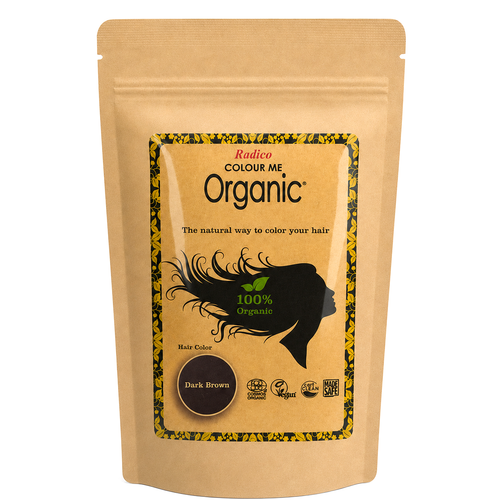
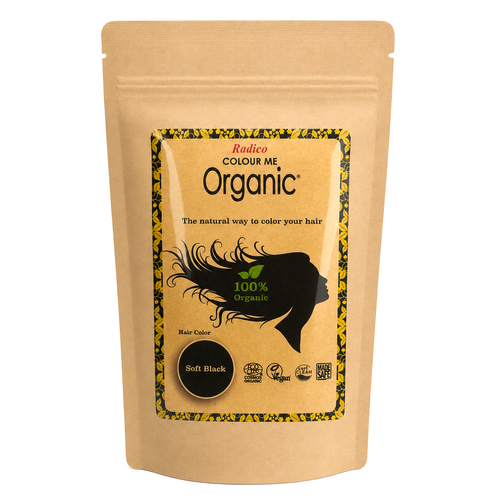
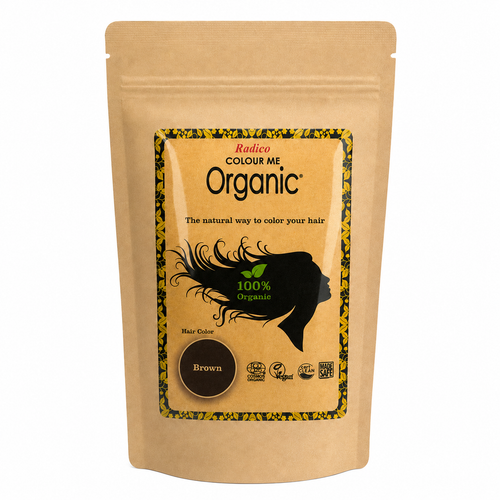
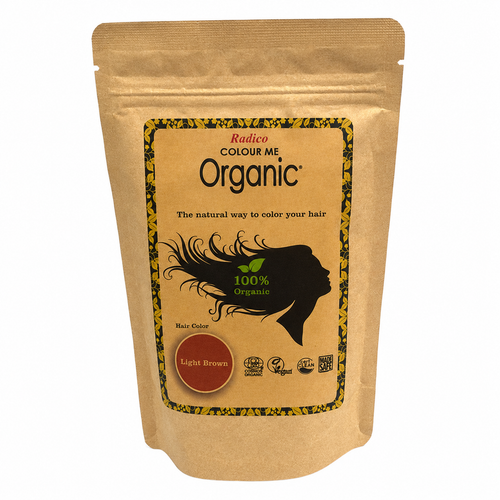
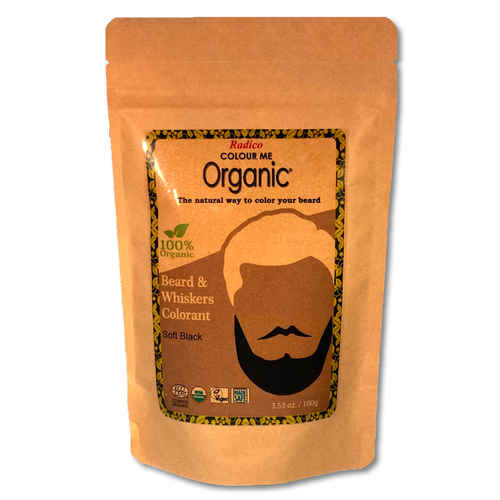
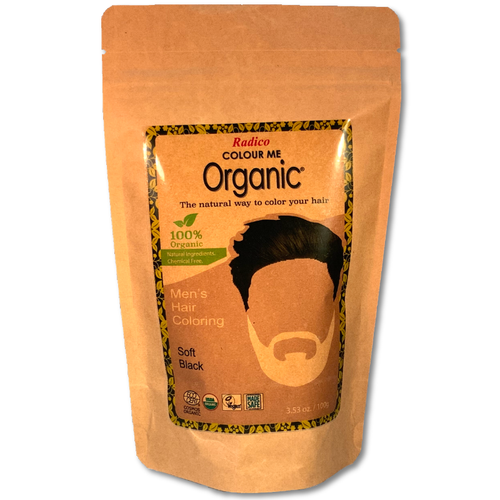
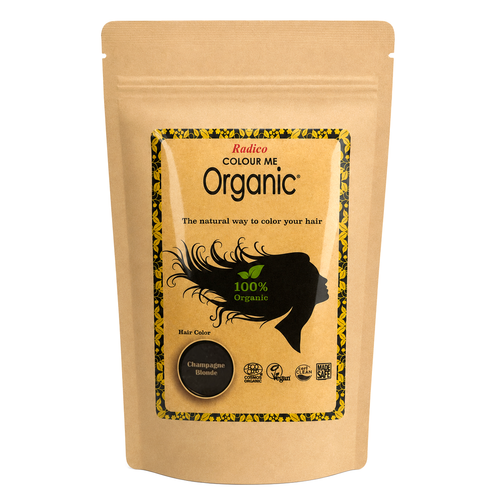
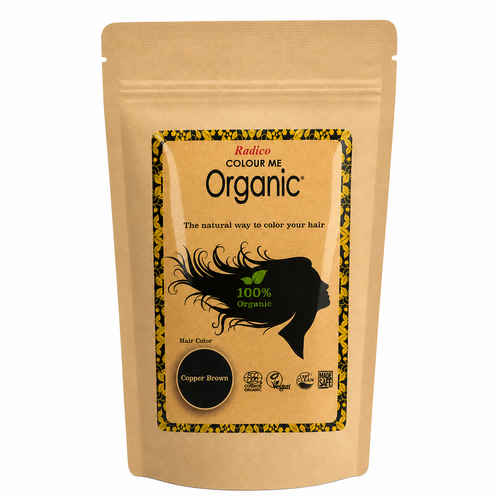
100% Certified Organic Hair ColourECOCERT since 2012

24 Shades.
All 100% Certified Organic.

Hair cannot repair itself, so whatever a colour does to a strand is still there three years later. Radico opens nothing — no developer, no peroxide — and an intact cuticle is what shine actually is. Your hair in three years is decided today.

Shop all 24 colours →

The Shade Range

24 Shades.
Nothing Synthetic.

Five plant pigments — henna, indigo, manjistha, hibiscus and turmeric — blended in 24 ways, from Soft Black to Sun Blonde. Henna alone would give you one colour; the blending is what gives you a range. No ammonia, no PPD, no peroxide.

  • ECOCERT Certified
  • 100% Organic
  • Vegan
  • Since 2012
All 24 shades

Pick Your Shade

Hover to preview · click to shopTap a shade to see it above

Blacks & Browns Compare all 6
Soft Black Dark Brown Brown Light Brown Copper Brown Mahogany
Wheat Blonde Beige Blonde Champagne Blonde Golden Blonde Honey Blonde Caramel Blonde
Reds & Coppers Compare all 6
Strawberry Blonde Light Reddish Blonde Reddish Blonde Auburn Red Wine Red Burgundy
Ash & Specialty Compare all 6
Darkest Ash Blonde Dark Ash Blonde Ash Blonde Light Ash Blonde Violet Sun Blonde

Still deciding?

See all 24 shades photographed on real hair, laid out side by side so you can spot the difference between close tones.

View the color chart

Avoiding a particular plant?

If you need to leave one ingredient out — because of a reaction, or because you don't want the tone it brings — these two collections are grouped by what they omit.

Or browse the full range →

Real Results

Plants Really Do Color Hair.

Every photo below is a customer's own result, shared on Instagram — including gray coverage.

Henna + Indigo — deepest colour, settles over 3 days Cassia-Softened — the same pair, made lighter Henna, No Indigo — warm tone, settles fast

How the herbs are balanced changes how each shade behaves — see what that means for yours →

10 customers · Results vary with natural hair color, gray percentage, and porosity

Shop hair color →
Real Application

If you have never coloured with plants

Powder. Water. And Time.

There is no developer to measure, no bottle to shake, nothing to time to the minute. You stir a powder into warm water and put it on. That is the whole preparation.

  • The pouchalready blended for your shade
  • Warm waterfrom the tap is fine
  • A bowl and a spoonany non-metal bowl
  • Gloves and a brushor your hands, in gloves
  • A shower capto keep the paste damp
  • About an hourand a day or two of patience after
  • Mix with water Certified organic plant powder becomes a smooth paste. That's the whole prep — the shade is already blended for you.
  • Apply to hair The paste coats each strand from root to tip. No fumes, no stinging.
  • Rinse, then let it air-dry Colour keeps developing over the next two to three days as the pigment reacts in air. Don't blow-dry it — heat stops that reaction where it stands, which is what leaves a purple result.

What you are watching: the paste never goes into the strand. The colour is built on the outside, over the days that follow — which is why the last step is to leave it alone.

See the full instructions New to colouring? The guide walks through the whole thing — plus timings for your exact shade, since browns finish fastest and ash tones take longest.

Already using something “natural”?

Turn the Box Over.

Ammonia-free, herbal, henna-based, botanical — none of those words is regulated, and most products carrying them still work the way a conventional dye works. Your cuticle does not know how many herbs were in the formula. It only knows whether it was opened. The two pictures below are the whole difference.

A tube labelled Colour Natural beside a second bottle labelled Developer, listing hydrogen peroxide, PPD and activator. Three stages on a hair strand: the cuticle scales are opened, the melanin inside is stripped, and new colour is built inside the strand.

The box that says natural

Still opens the hair to build colour inside

  • The tell is the second bottle. A developer, an activator, or PPD on the list means peroxide is doing the colouring. The herbs are along for the ride.
  • Same reaction as any permanent dye. The cuticle is lifted, the melanin is broken down, and new colour is built inside the strand.
  • Same cost, every time. Peroxide converts keratin’s cystine to cysteic acid whether or not there is aloe in the tube. That change accumulates and does not revert.
A bowl of green herbal paste and water droplets carrying pigment to a hair strand. Four stages: water carries the pigment, henna bonds to the cuticle, indigo forms in place between the scales, hibiscus and manjistha sit on the surface. The cuticle stays closed.

Radico Colour Me Organic

Builds the colour on the outside

  • One pouch, and water. There is no second bottle because there is nothing to activate. Twelve plant powders, and every one is on the label.
  • Nothing opens. Henna bonds to the outer layers; indigo forms in place beside it. Your melanin is left where it was.
  • The honest limits. It cannot lighten, and it takes patience — an hour on, then two to three days while the colour finishes developing.

How to check the box in your bathroom. If there is a developer, a second bottle, or PPD anywhere on the label, the plant ingredients are along for the ride. If it lists only plant names — and you can find it in a certification directory — it is what it says. Neither answer is a verdict on you. It is just what the box is.

Why it matters more than it sounds. Natural is not a scale you can be halfway up. Either the cuticle was opened this month or it was not — and the hair that was opened is still on your head next year, and the year after. The section below is about that.

Why This Compounds

Your Ends Are
Keeping a Record.

Hair is dead tissue. It cannot repair, and it cannot forget. Scalp hair grows about a centimetre a month and stays on your head for years — so the strand at your shoulder has been there for about two years, and everything done to it in that time is still in it.

Hair length and age: chin length is about one year old at the ends, shoulder length about 2.5 years, waist length about five years. Colouring every four to six weeks means ten or more rounds a year, and thirty or more on the same strand. An intact cuticle reflects light and gives natural shine; a damaged cuticle does not repair or recover.

Growth rate is an average; individual hair varies. Ages shown are approximate.

So here is a test that costs nothing. If you have been colouring with something “natural” for a few years, look at your ends and compare them with the new growth at your roots. Some roughness is sun, heat and brushing, and we are not going to pretend otherwise. But if the ends are noticeably worse than the roots, something has been opening the cuticle — and the word on the box did not stop it. Your hair kept the receipt.

An intact cuticle is what makes hair reflect light evenly, so the shine people read as healthy is largely a surface that is still smooth. Radico does not put that shine there. It leaves the cuticle you already have alone, so the shine you were born with has a chance of still being there in five years.

To be clear about what this is not: plant colour is not a treatment and not a repair. It cannot undo what is already in your ends. What it does is stop adding to the total — which, over the years a single hair is on your head, is the only thing that was ever available.

The part that is actually up to you

Colouring is not a decision you make once. It is a decision you make every four to six weeks, for as long as you colour — and each time, the same strand is there to receive it. The hair you colour today will still be on your head in 2030. What you put on it today is what it will be made of then.

That is the whole reason to go all the way rather than most of the way. The shine people call youthful is a cuticle that is still intact. Nothing puts it back. The only way to have it later is to have not taken it — and that is a choice made on the day you colour, not the day you notice.

The Formula

Every Shade Is a Recipe

There is no dye in the pouch — only ground plants. Pick a shade to see exactly which ones are in it, and what each is doing in the blend.

    Every plant here is certified organic, and no shade uses all twelve. Ingredient lists run in order of quantity — so the first name is doing the most work.

    Want to choose by what's in it? All 24 blends laid out side by side — what each plant does, why the order on the label matters, and which shades leave henna or indigo out entirely.
    The ingredients →

    Before and After the Colour

    Two Products, Two Opposite Jobs

    Neither of these is a daily shampoo, and we'd rather explain what each one is for than sell you both. One strips, one settles — and the difference between them is measurable on a pH meter.

    Where our products sit

    Our own readings, on a handheld meter. The shaded band is hair's own surface — the range everything is measured against.

    Acid Alkaline
    Hair Treatment PowderAmla, reetha, shikakai pH 3.2–3.5
    Hair's own surfaceFor reference pH 4.5–5.5
    Organic Shampoo BarA true soap pH 9.35
    pH 246810

    Things you already know the taste of

    Lemon juice pH ~2.2
    Apple cider vinegar pH ~3
    Black coffee pH ~5
    Baking soda in water pH ~8.3
    Castile soap pH 9–10

    The treatment powder sits just below hair's own range; the bar sits well above it. Everything else we make is on the acid side, because that's where you want a wash you use regularly. The bar is the one exception, and that is the whole point of it.

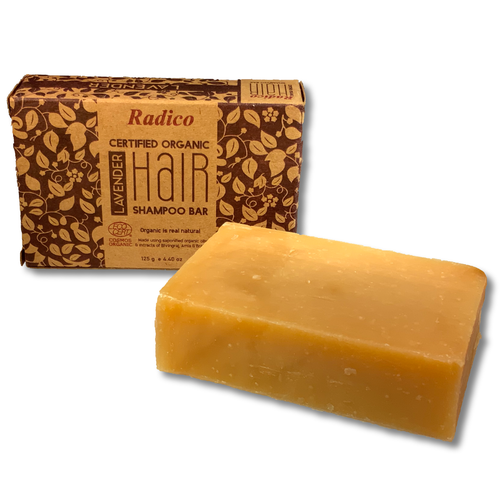
    Radico Organic Shampoo Bar

    The wash before colouring

    pH 9.35 · Alkaline

    Organic Shampoo Bar

    A true soap — five organic oils saponified, the way soap has been made for centuries. Its job is to strip. Conventional shampoos and conditioners leave silicone and polymer film behind, and plant pigment cannot bind through a film. One wash with this before you colour, and it's gone.

    What we're less sure about: you'll read that alkalinity opens the cuticle so pigment binds better. Alkaline conditions do lift cuticle scales. Whether that measurably improves the result, we don't know — we haven't found a study, and we haven't run one. The residue is the part we're confident about.

    Not for daily use, and not for 72 hours after colouring. Contains almond oil (a tree nut) and lavender oil, a known contact allergen. Don't use it if you react to either.

    Tap an ingredient

    Read the full page
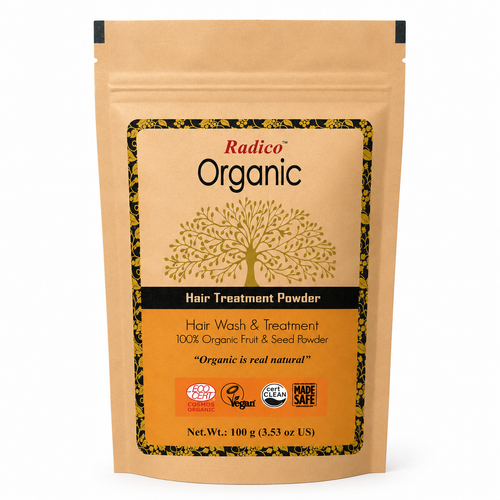
    Radico Hair Treatment Powder

    The acid side of the routine

    pH 3.2–3.5 · Acid

    Hair Treatment Powder

    Three fruits ground together — amla, reetha and shikakai. Reetha and shikakai carry saponins, which wash without a detergent. Its other job is acidity: after an alkaline wash, cuticle scales stand up and hair catches on itself. An acid rinse brings them back down.

    An old pairing, not a new idea. Soap followed by an acid rinse is how hair was washed for a very long time before pH-adjusted shampoo existed. Mix it thin as a rinse, or thick as a fifteen-minute treatment — either brings the pH back down.

    What we don't claim: that it promotes growth, prevents greying, or delivers vitamins into the hair. It's a wash and an acid rinse made from three certified organic fruits.

    Tap an ingredient

    Read the full page

    We Show Every Review

    Good and Bad

    Read unfiltered feedback from real customers to help you decide. Our Judge.me certification guarantees 100% of verified reviews are published—so you get the full picture before you buy.

    3.9 out of 5 stars · 147 verified reviews

    Why Choose Radico

    Certified Organic,
    and You Can Check

    In 2012, Radico became the world's first hair color brand certified COSMOS ORGANIC by ECOCERT GREENLIFE — a standard that covers not only the ingredients, but the farming, the supply chain and the manufacturing behind them. Every shade is listed individually in the public directory.

    2012 World's First COSMOS
    Organic Hair Color
    26 Products Listed
    in the COSMOS Directory
    12 Herbs Across
    All 24 Shades

    Tap a certification to see what it screens for

    Each of these looks at a different question, and one of them isn't about safety at all. What each one covers, plus our heavy metals lab report →

    What's Not in the Pouch

    Every ingredient below is common in conventional hair color — and absent from Radico.

    None of these are added to our formula. Heavy metals are the one worth explaining separately — they occur naturally in soil, so no plant product is entirely free of them, which is why we had a batch measured rather than printing "none". The lab report →

    Tap any ingredient to see why we left it out

    New to Herbal Hair Color?

    Read This First

    Chemical Dyes

    Fast and predictable,
    using peroxide and ammonia

    Temporary Rinses

    Sit on the surface,
    wash out again

    Radico

    Ground plants only,
    no peroxide or ammonia

    Henna's pigment forms a covalent bond with the keratin in your hair — it attaches to the fibre rather than resting on it, which is why plant colour wears down as the hair wears rather than rinsing away. Indigo works differently: it sits in the outer layers and deepens over the days after you rinse. Both need something from you first.

    For dark shades: why colour sometimes comes out warm

    Every dark herbal shade is a warm colour with blue laid over the top. Henna bonds early, but indigo is still developing when you rinse — and it only develops while your hair stays damp. If the hair dries too fast, the blue stops arriving and the warmth underneath is what you see.

    Which makes one instruction matter more than all the others: don't dry it. Not with a warm dryer, not with a cool one — the problem is the drying, not the heat. We tested this on grey swatches, and re-wetting afterwards did not bring the colour back.

    Day 0
    Green
    Day 1–2
    Green clears
    Day 3
    Your shade

    Green at the rinse is the reaction running, not a fault — and it clears on its own. You'll see it most clearly on grey or light hair, because there's no pigment underneath to hide it.

    Always do a strand test first One small section tells you exactly how your hair responds — before you commit a whole head to it. See How →

    Colour came out warmer than expected?

    The most common thing that happens, and the one we hear about most. We'll send the same shade or a deeper one, free of charge.

    Shade isn't the right match?

    We'll help you find the one that is — or refund the colour, whichever you'd rather.

    First-Time Customer Support →

    No conditions. No expiration.

    Before Your First Application

    How to Do a Strand Test

    Why test first? There is nothing in the pouch to force a fixed result — no peroxide, no developer — so where the colour lands depends on the hair it lands on. And because henna bonds to the fibre rather than sitting on it, it wears down gradually rather than washing out. One small test tells you what to expect before you commit.

    Six Simple Steps

    1. Open the pouch Inside, open the inner bag containing the herbal hair powder.
    2. Mix a small amount Blend a spoonful of powder with warm water until it's as thick as yogurt — smooth enough to spread, thick enough not to drip.
    3. Apply to a hidden strand Choose a discreet section — behind the ear or under the top layer works well — and coat it generously.
    4. Wrap it Cover the strand with kitchen film so the paste can't dry out. Paste that has dried has stopped working, whatever the clock says.
    5. Leave it for the full time, then rinse Use the time your shade needs — an hour for our browns and blacks, two to three hours for the ash tones. Testing for less time than you'll use tells you less than nothing.
    6. Let it dry on its own No dryer, warm or cool. Forced drying stops the colour developing, and the test would show you a result you're not going to get.

    Then wait. Shades containing indigo keep developing for up to three days. Judge the test on day three, not the first evening — and expect a green stage in between if your hair is grey or light.

    Where to go from here

    Three Ways In

    You have read to the bottom of the page, which means you probably want something more specific than a shop button. Here is what is actually behind each door.

    Colouring with plants for the first time

    Do the strand test. It takes an hour and it settles everything.

    There are no chemical additives here to force a fixed result, so the outcome depends on the hair you already have. One small test tells you what your hair will do before you commit to all of it — and if the shade still isn’t right, we replace it or refund it. No conditions, no expiry.

    Still not sure which shade? Send us a photo and what you are hoping for, and we will tell you honestly whether we have it — including when the answer is no. Contact us, or write to customer-service@radicousa.com.

    Guaranteed Satisfaction

    If you are unsatisfied with the result, please contact us for a free replacement of the color of your choice. Returns within 30 days receive a full refund.

    Refund policy ▶︎

    Free shipping on orders over $25.00

    All items on Radico USA website ship for a flat-rate to any address in the continental US for just $4.99.

    Get free shipping on any order above $25.

    Subscribe and Save

    Save 15% when you order a subscription. We will automatically ship your products at the frequency of your choice. Subscriptions can be cancelled any time.

    Learn about subscriptions ▶︎