Organic Hair Care
Everyday Herbal Care
Single herbs and blends to nourish hair back to its natural strength.
Care, Straight from Nature
100% Certified Organic

Hair Treatment Powder
Free shipping over $25.00
Shop Now
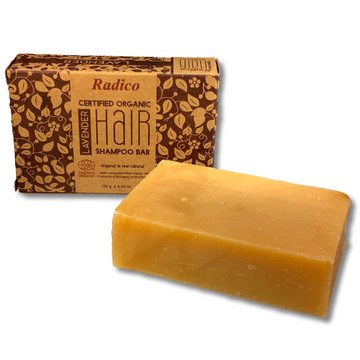
Organic Shampoo Bar
Free shipping over $25.00
Shop Now
Bhringraj Leaf Powder
Free shipping over $25.00
Shop Now
Neem Leaf Powder
Free shipping over $25.00
Shop Now
Amla Fruit Powder
Free shipping over $25.00
Shop Now
Shikakai Seed Powder
Free shipping over $25.00
Shop Now
Reetha Fruit Powder
Free shipping over $25.00
Shop Now
Colorless Henna Leaf Powder
Free shipping over $25.00
Shop Now
Brahmi Leaf Powder
Free shipping over $25.00
Shop Now
Methi Seed Powder
Free shipping over $25.00
Shop NowSwipe to see all 10 products →
Hair & Scalp Care
Four Washes, Measured
These are washes, not treatments, and they are not interchangeable. The clearest way to tell them apart is where each one sits on a pH meter — so here are our own readings, against hair's own surface.
Where our washes sit
Our own readings, on a handheld meter. The shaded band is hair's own surface, and the vertical line is neutral — pH 7, where acid becomes alkaline.
Things you already know the taste of
Reetha lands inside hair's own range, and the bar lands where soap lands. The reference figures are approximate and vary with dilution — they are here to give the numbers a scale, not as measurements of ours. Three of these four are on the acid side, because that is where you want a wash you use regularly.
Reetha Powder
Soapnut, ground. Its saponins are non-ionic surfactants — they clean without a detergent and without a charge. Of everything we make, this is the one that sits inside hair's own range, which is why it is the wash we would reach for most often.
About reetha →
Shikakai Powder
Also saponin-bearing, and the most acidic thing we make. Acid conditions let cuticle scales lie flat, which is what makes hair feel smooth rather than catchy. Used as a hair wash in India long before shampoo existed.
About shikakai →
Hair Treatment Powder
Amla, reetha and shikakai ground together — two saponin fruits plus the acidity of amla. Mix it thin as a rinse-out wash, or thick as a treatment. This is also the acid rinse after the bar, which is the traditional pairing with any soap.
About the powder →
Organic Shampoo Bar
A true soap, and the one alkaline product we make. Its job is to strip: silicone and polymer film from conventional hair care sits between plant pigment and the hair, and a mild wash will not shift it.
Not for daily use, and not for 72 hours after colouring. Contains almond oil (a tree nut) and lavender oil, a known contact allergen.
If you are coming from ordinary shampoo
The powders barely foam, and the bar foams a lot. That difference is chemistry, not quality. Lather is what happens when a surfactant traps air; cleaning is what happens when it surrounds oil. A surfactant can do one well and the other hardly at all — saponins clean without foaming much, and soap does both.
Neither figure tells you how well the other job is being done. If the lack of lather feels strange at first, that is worth knowing before you decide the powder isn't working.
Single-Herb Care
Eight Herbs, One Ingredient Each
Mix with water, apply, rinse — that is the whole routine for all eight. We've grouped them by what each one actually does, which is not always the group you'd expect from how these herbs are usually sold.
They wash
Both carry saponins — plant compounds that surround oil the way a detergent does. These are the only two of the eight that genuinely clean.
They coat, or change the paste
None of these three cleans. What they do is physical — they bind to the surface of the strand, or they change how the mixture behaves in your hands.
Traditional scalp herbs
These three are here on the basis of long-standing use in Ayurvedic hair care. That is the honest basis, and we'd rather name it than dress it up.
Why the groups look like this. Neem and amla are often sold as cleansers. Neither carries the saponins that do the cleaning, so we haven't put them there. Methi is often described as a protein treatment; what it reliably contributes is mucilage.
None of the eight is claimed here to treat a scalp condition, promote growth, or slow greying. If the evidence for any of them ever gets stronger than tradition, we'll move it into a different group and say why.

Ayurvedic hair care · Single herb
Amla Fruit
Emblica officinalis — Indian gooseberry, amalaki
The one herb here that changes the colour.
Of the eight single herbs we make, seven are colour-neutral — add them to any shade and nothing shifts. Amla is the exception. It is naturally acidic, and acidity cools and deepens a henna result.
That isn't a warning so much as the reason it exists in our range. Amla is in 23 of our 24 shades, more than any other herb, precisely because that shift is something we want and have measured into each recipe.
Add it to a colour yourself and you're moving that dial. People have done it for a very long time — it's the standard way to cool a henna that came out too bright. Just know you're changing a recipe, not adding a neutral conditioner. Strand test first.
What is actually in it
One ingredient: milled Emblica officinalis fruit. Three compounds are worth naming, and they are not equally specific to amla. Tap for the data.
A note on vitamin C
Amla is widely described as rich in vitamin C, and the fruit is. That figure comes from nutritional analysis — it describes what amla does when eaten.
What ascorbic acid does on a scalp, applied as a water paste and rinsed off within the hour, is a different question, and not one we have found answered in the literature. We'd rather not carry a number across from one context to another. What we can tell you is that amla is acidic, and that its acidity is what does the visible work here.
Ayurvedic hair care · Single herb
Reetha Fruit
Sapindus mukorossi — soapnut, soapberry, ritha
It cleans. It does not lather.
Reetha washes through saponins — surfactants the plant makes itself. They lift oil the way any surfactant does, but produce a thin, short-lived foam. If you are expecting suds, this will look like it is not working.
Those are two separate properties. Lather is what happens when a surfactant traps air; cleaning is what happens when it surrounds oil. Dishwasher detergents are deliberately engineered not to foam, and they clean perfectly well. Shampoo foams heavily because people expect it to.
There is a second difference that never appears on packaging. Sapindosides carry no electrical charge; sulfates carry a negative one — and hair's own surface is negatively charged at washing pH. That interaction is part of why hair can come out of a sulfate wash feeling squeaky and rough.
Our own reading: pH 4.54 to 4.90, mixed one part powder to three parts water. Hair's own surface sits at roughly 4.5 to 5.5, so reetha lands inside that range with nothing added to adjust it. Soap, by contrast, sits around pH 9 or 10 — which is where the name sends people, and where the comparison stops holding.
The one place it is harsher than soap
In our own experience reetha stings the eye noticeably more than ordinary soap does. Being a plant does not make a molecule gentle on the cornea.
And because this is milled fruit rather than a dissolved detergent, fine particles can lodge in the eye and keep working after the water is gone. Tilt your head back, keep your eyes closed while the wash is on, and if any gets in, flush with plenty of cool running water — well past the point it stops hurting. Do not rub.
What is actually in it
One ingredient: milled Sapindus mukorossi fruit. Two saponins account for most of what it does, and the difference between them is one sugar unit. Tap for the data.
What we will and will not claim
That saponins are non-ionic surfactants is physical chemistry rather than a health claim, and it is not in dispute.
What we have not done is measure any of the outcomes. We have not compared cleaning efficiency against a conventional shampoo, and we have not measured combing force. Hair does seem to run through the fingers more easily afterwards — but that is an observation, not data, and we would rather label it as one.
Ayurvedic hair care · Single herb
Shikakai
Acacia concinna — shikai, fruit for the hair
It washes like reetha. It leaves the hair different.
Both of our washing herbs clean through saponins, and both produce far less foam than a shampoo. What separates shikakai is what the hair feels like afterwards. Its name says as much — shikai means fruit for the hair, and it became the washing herb of Ayurvedic hair care rather than a general-purpose cleanser.
If you are choosing between the two
Reetha
Sapindus mukorossi
A wash and nothing else. Cleans thoroughly, and asks you to condition separately if it needs it.
Shikakai
Acacia concinna
Washes and softens in one step. Hair comes out easier to comb through, which is why it became the traditional choice.
Neither is a stronger cleanser than the other in any way we have measured. The difference is in what is left behind, not in how much is taken away. They can also be used together, and traditionally often were.
We measured the pH, and it surprised us: 2.1 to 3.0. Then we diluted the mix to half strength and nothing happened — where reetha rose from 4.90 to 5.04, shikakai did not move at all. That is a buffer holding the pH steady. Acidic conditions let cuticle scales lie flat, which is most of what we perceive as smoothness, so here the wash and the smoothing are the same step rather than two.
What a pH of 2 also means
That is the region of lemon juice. Hair's own surface sits at 4.5 to 5.5, and products designed to smooth the cuticle are usually formulated between 3.5 and 4.5. Shikakai, as it comes out of the pod, is below that. It has been used this way for a very long time, and it is on the hair for two or three minutes — but a few things follow.
- Do not leave it on. This is a wash, not a mask.
- Diluting will not soften it. Use less powder or less time instead.
- Avoid it on broken or inflamed skin.
- Keep it out of your eyes. Saponins sting, particles can lodge, and the acidity does not help.
What is actually in it
One ingredient: milled Acacia concinna. We name the compound class as well as a compound, because the class is the part we are confident describes the whole pouch. Tap for the data.
What we will and will not claim
The pH figures are our own, on a meter calibrated against 4.00 and 7.00 buffers. We publish them because you can check them yourself with an inexpensive meter, and because we have not found anyone else publishing any.
What we have not measured is any outcome. We have not compared cleaning efficiency against a shampoo, and we have not measured combing force against reetha. Hair does come out easier to comb through than we expect — that is an observation, and we would rather label it as one.
Ayurvedic hair care · Single herb
Bhringraj
Eclipta alba — Kesharaja, the king of hair
A scalp herb, not a colour herb.
Of the herbs in this range, bhringraj is the one Ayurveda names for hair specifically. It carries no lawsone and no indigotin, so it does not dye hair or cover gray — and that is exactly why it can sit inside a colour formula without affecting the shade.
You have almost certainly used it already. Bhringraj is one of the herbs in 22 of our 24 shades — every one except Violet and Honey Blonde. Not as a dye, but as the scalp herb inside the recipe. So the scalp care doesn't begin when you buy the powder and stop when you start colouring; it's the same herb doing the same job in both.
One thing that matters more than time: the plant compounds travel in water, so once the paste dries on the scalp nothing further moves. A dry paste left on for two hours does less than a damp one left for forty minutes. Cover the hair.
Before you use it
Eclipta alba belongs to the Asteraceae family, alongside ragweed, chrysanthemum, marigold and daisy. If you have a known Asteraceae allergy, patch test on your inner forearm 48 hours before a full application — or use brahmi instead, which is in the unrelated Plantaginaceae family.
What is actually in it
One ingredient: milled Eclipta alba leaf. Tap for the compound data — and for what we deliberately do not claim.
What the research has examined — and what it has not
Laboratory work on Eclipta alba has centred on wedelolactone. Computational studies have modelled how it interacts with proteins in the hair growth cycle, and animal studies have looked at concentrated extracts on skin.
That work is preclinical. It uses concentrated extracts rather than milled leaf, and it does not establish that applying bhringraj powder to a human scalp produces hair growth. We are not claiming that it does. What we can tell you is what is in the powder, and what bhringraj has been used for in Ayurveda for a very long time.
Ayurvedic hair care · Single herb
Brahmi
Bacopa monnieri — water hyssop, the herb of grace
Two plants are sold as brahmi. This is Bacopa monnieri.
The name brahmi is used in India for two unrelated plants, and a pouch labelled simply "brahmi" may be either one. They sit in different plant families and carry different compounds. Ours says Bacopa monnieri, and that is what is in it.
Worth checking on any pouch you buy — ours included
They are not related. Both carry triterpenoid saponins, which is part of why the names became tangled — but the plants and their compounds are different.
You may already be using it. Brahmi carries no pigment, so it sits inside a colour recipe without touching the shade — and it is in 11 of our 24 shades. Every one of them is a blonde; it appears in no brown and no red. If you colour with an ash or a blonde, brahmi has been on your scalp already.
One thing that matters more than time: the plant compounds travel in water, so once the paste dries on the scalp nothing further moves. A dry paste left on for two hours does less than a damp one left for forty minutes. Cover the hair.
What is actually in it
One ingredient: milled Bacopa monnieri leaf. The name of its principal compound means two different things depending on context, which is worth knowing. Tap for the data.
What the research has examined — and what it has not
Most published work on Bacopa monnieri concerns oral use rather than anything applied to skin or hair. The bacosides have been studied in cell, animal and some human trials for effects that have nothing to do with the scalp.
We have not found published work establishing what milled brahmi leaf does when applied to a human scalp as a water paste. We are not claiming it treats any scalp condition. What we can tell you is what is in the powder, and how brahmi has been used in Ayurvedic hair care.
Ayurvedic hair care · Single herb
Neem
Azadirachta indica — the Indian lilac
Leaf powder, not neem oil.
Almost everything written about neem for hair is written about neem oil, which is pressed from the seed — a different part of the tree, with a different principal compound and the strong sulphurous smell neem is known for. This is the leaf. It mixes with warm water into a paste and rinses out with water.
Leaf, seed and oil are three different products
If you have read that neem smells strongly, that was about the oil. And because this is a powder rather than an oil, it goes straight into a henna or Radico mix without affecting the colour.
Neem does not wash. Unlike reetha and shikakai, it carries no saponins, so it is not a substitute for shampoo — it is a scalp treatment, worked into the skin at the roots with the fingertips. It is also the one herb of the eight that is not an ingredient in any of our 24 shades. We keep it separate.
What is actually in it
One ingredient: milled Azadirachta indica leaf. Tap for the compound data — and for the compound most listings name that isn't in here.
What the research has examined — and what it has not
Neem is among the most-studied plants in the traditional pharmacopoeia. Laboratory work on its limonoids — nimbolide in particular — has examined antimicrobial and anti-inflammatory activity in cell and animal models.
That work uses isolated compounds and concentrated extracts, not milled leaf in a water paste on a human scalp. We are not claiming that this powder treats any scalp condition. What we can tell you is what is in the powder, and how neem has been used: as a scalp herb, for a very long time.
Ayurvedic hair care · Single herb
Methi
Trigonella foenum-graecum — fenugreek
This is the one you can feel working.
Stir methi powder into warm water and it turns slippery within a minute. That is galactomannan — a soluble polysaccharide the seed is unusually rich in, which swells on contact with water and forms a viscous gel. It is a film-former: the paste coats the strand, and the strand slides against its neighbour instead of catching.
None of the other seven do this. It is why methi is a strand herb rather than a scalp herb, and it is the reason a little methi in a colour mix makes the paste easier to spread.
Worth correcting a common claim: methi is sometimes described as a dye plant. It isn't — it carries no lawsone and no indigotin, so it will not colour hair and will not shift a herbal colour you already have.
What is actually in it
One ingredient: milled Trigonella foenum-graecum seed. Tap for the data — including the one claim we handle differently from most listings.
What we will and will not claim
The gel is not in dispute. Galactomannan's water-binding and film-forming behaviour is well characterised, and you can verify the slip yourself the moment you mix the powder. That is a physical property, not a health claim.
Fenugreek has been examined in the laboratory for a range of activity, and you will find sites citing early work on hair loss pathways. That work is preclinical, uses concentrated extracts rather than milled seed, and we are not going to build a claim on it. We are not claiming this powder reduces hair fall, promotes growth, or treats any scalp condition.
Ayurvedic hair care · Single herb
Colorless Henna
Cassia obovata — "neutral henna"
Not henna. Used exactly like it.
It is called neutral henna not because it is henna, but because it is used the same way — mixed with warm water, applied as a paste, rinsed out. The two plants aren't related, and they don't sit in the same family.
Where the difference actually is
Both are quinones that associate with keratin. The difference is how strongly coloured that quinone is — which is the whole of why one dyes hair and the other doesn't.
It is not a protein treatment, and for some people that is the point. Conventional strengthening masks work by depositing hydrolysed protein, which some hair — particularly low-porosity hair — responds to badly, going stiff and straw-like. There is no added protein here at all.
Two things to know before you buy
On very pale blonde, platinum or white hair, a long application (60+ minutes, repeated) can leave a faint golden or straw-toned cast. Start at 20 minutes and strand test. This is the one herb of the eight where we would insist on that.
Check the ingredient list — on any brand. Some products marketed as "neutral henna" contain added synthetic dyes or PPD. Genuine Cassia obovata should list one botanical ingredient and nothing else.
What is actually in it
One ingredient: milled Cassia obovata leaf. Tap for the compound data.
A note on the evidence
Most of the published research on this plant examines its isolated constituents — chrysophanol, emodin, aloe-emodin, kaempferol — rather than milled whole leaf applied to hair. Controlled trials on Cassia obovata hair masks specifically are limited.
So we are not claiming this powder treats dandruff, any scalp condition, or hair loss. What we can say is what is in the pouch, that the plant has been used this way across Ayurvedic and North African traditions for a very long time, and that it will not change your colour.